
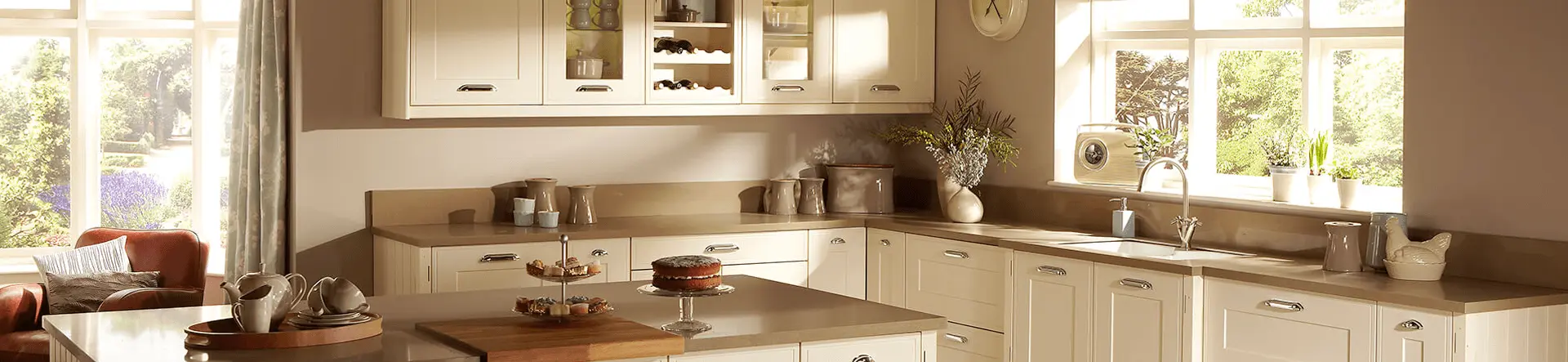
Solid Wood Cabinets vs. Particleboard Cabinets: A Comprehensive Comparison

About the Author : Follow on LinkedIn.
Choosing the right wooden cabinets is crucial for a functional and beautiful home. Among the many options, solid wood and particleboard stand out, each with distinct advantages and disadvantages. This article provides a detailed comparison of their durability, appearance, cost, environmental impact, and maintenance/repair, to help you select the best option for your needs and budget.
What are Solid Wood Cabinets?
Solid wood panels retain the natural grain and characteristics of the original timber, offering a unique, organic look. Unlike large, single-piece slabs, which are harder to source and work with, these panels are milled and joined into manageable sizes for easier handling and wider availability, while remaining entirely solid wood.
Manufacturing Process: The process involves meticulous steps, starting with raw timber cutting, material selection, drying to prevent warping, precise cutting, joining (such as finger joints or butt joints), and adhesive bonding.
Common Wood Types and Characteristics
Frequently used wood types include oak, teak, cherry, walnut, maple, and pine. Each species offers distinct physical properties, grains, and colors, influencing their application:
- High hardness: White oak and hard maple offer exceptional durability, making them ideal for kitchen cabinets and frequently used storage units.
- Fine grain: Walnut and cherry provide elegant finishes, perfect for upscale bookshelves and display cabinets.
- Moisture resistance: Teak and white oak perform well in humid environments, enhancing cabinet longevity in bathrooms and kitchens.
Key Features and Applications
Crafted for enduring quality and natural charm, solid wood cabinets offer versatile design and lasting stability, making them a favored choice for many home styles. Key features and applications include:
- Durability and longevity: Solid wood’s robust structure ensures years of reliable use.
- Unique aesthetics: Natural grain patterns deepen over time, creating a rich, evolving beauty.
- Design flexibility: Solid wood is highly workable, allowing for intricate detailing and custom shapes.
- Dimensional stability: Engineered panels reduce the risk of warping and cracking compared to raw timber, adapting better to environmental changes.
- Common Applications: Solid wood panels are widely used in kitchen cabinets, bookshelves, and other premium furniture, bringing texture and warmth to interiors.
What are Particleboard Cabinets?
Particleboard is a composite material made from small wood particles, like chips and sawdust, bonded with adhesives.
Manufacturing Process: Mold-resistant agents are sometimes added to enhance particleboard's properties. To enhance durability, a melamine laminate layer is added. This process significantly improves particleboard by providing a robust surface that resists scratches and moisture, while also offering a wide array of colors and textures for enhanced design versatility.
Key Features and Applications
The affordability, lightweight nature, and versatile finishes of particleboard explain its widespread use in budget-conscious and do-it-yourself furniture, detailed in the following key features and applications:
- Affordability: The lower cost, due to relatively cheaper materials and processes, is a major advantage, especially for budget-conscious consumers.
- Lightweight structure: Its lighter weight makes particleboard easier to transport and assemble, rendering it ideal for do-it-yourself projects.
- Versatile finishes: Particleboard offers versatile finishes that can effectively imitate various wood grains and colors, readily accommodating diverse interior design styles.
- Common applications: Due to its characteristics, particleboard is frequently utilized in the production of office automation (OA) furniture and ready-to-assemble DIY home furnishings.
Solid Wood vs. Particleboard: Full Comparison
Choosing the right material for your cabinetry is a significant decision. Both solid wood and particleboard offer unique characteristics that cater to different needs and budgets. Let's delve into a detailed comparison across key factors:
1. Durability and Lifespan
- Solid Wood: When it comes to longevity, cabinets made from solid wood offer superior durability and can last for many years with proper care. Their robust structure withstands daily use effectively.
- Particleboard: Conversely, those constructed from particleboard are less durable. The adhesives binding the wood particles can weaken over time, and they are particularly vulnerable to moisture. Damp environments can cause swelling and structural damage, shortening their lifespan and reducing their load-bearing capacity. This material is generally not recommended for humid areas.
2. Appearance and Texture
- Solid Wood: Real wood showcases natural variations in grain and a warm texture that can mature beautifully over time, adding organic elegance to a space.
- Particleboard: This composite material provides a more uniform and controlled appearance. While modern finishes can mimic wood grains and colors, it often lacks the natural depth and unique character of genuine timber.
3. Price and Cost
- Solid Wood: Units crafted from solid wood typically have a higher price point, reflecting the cost of premium materials and craftsmanship. It's often seen as a long-term investment.
- Particleboard: This engineered board is a more cost-effective alternative due to less expensive materials and manufacturing, making it suitable for budget-conscious projects.
4. Environmental Impact and Safety
- Solid Wood: Natural timber, as a material, can be a more sustainable choice, especially when responsibly sourced. Its processing generally involves fewer chemical emissions.
- Particleboard: The production of particleboard often uses adhesives that may contain formaldehyde. While regulations exist, lower-quality options might affect indoor air quality. Moisture exposure can also lead to mold growth in this material.
5. Maintenance
- Solid Wood: Maintaining real wood units involves regular care, such as oiling or waxing, to protect the finish and prevent drying or cracking.
- Particleboard: Furniture made from particleboard is easier to clean with simple wiping. However, it is less resilient to environmental changes and damage.
6. Repairability
- Solid Wood: Cabinets made of solid wood can often be repaired if scratched or dented through sanding, filling, and refinishing, extending their usability.
- Particleboard: Units constructed from particleboard are difficult to repair, especially if the laminate peels or the core swells, often necessitating replacement.
In essence, real wood provides superior durability and natural aesthetics at a higher cost, while this engineered board offers an affordable option with versatile finishes but lower durability. Here is a chart with a summary.
| Criteria | Solid Wood Cabinet | Particleboard Cabinet | Better Choice? |
| Durability | Excellent, long lifespan | Moderate, susceptible to damage | Solid Wood |
| Appearance | Natural, unique grain | Uniform, simulated textures | Solid Wood |
| Cost | Higher | Affordable | Depends on Budget |
| Environmental Impact | Generally lower emissions | Depends on adhesive quality | Solid Wood |
| Maintenance | Requires regular upkeep | Easy to clean, minimal upkeep | Particleboard |
| Repairability | Easy to refinish and repair | Difficult to repair after damage | Solid Wood |
| Humid Areas | High suitability with treatment | Low suitability, prone to swelling | Solid Wood |
Conclusion
Both solid wood and particleboard cabinets offer distinct advantages and limitations. Solid wood excels in durability, natural aesthetics, and environmental friendliness, making it a prime choice for those who value quality and longevity. Particleboard, with its lower cost and variety of finishes, serves as a practical option for budget-conscious buyers or those seeking flexibility in design.
For individuals with a substantial budget, or those uncertain but prioritizing enduring quality and premium aesthetics in high-use, long-term installations, solid wood cabinets represent the definitive and worthwhile investment. Particleboard remains a viable option for temporary or decorative applications where budgetary constraints and ease of assembly are primary considerations.
Cabinet Solutions by FUIN Design Hardware
For those seeking premium solid wood cabinet solutions, FUIN Design Hardware offers products that emphasize material excellence, meticulous craftsmanship, and an eco-conscious philosophy. With a focus on durable design and natural elegance, FUIN’s solid wood cabinets stand as a testament to enduring quality.
Learn more about FUIN Design Hardware’s offerings here and transform your space with lasting beauty. Please feel free to contact us for further information.